
Whole-House Humidifier vs. Portable Units: Which Is Better for WA Allergy Season?
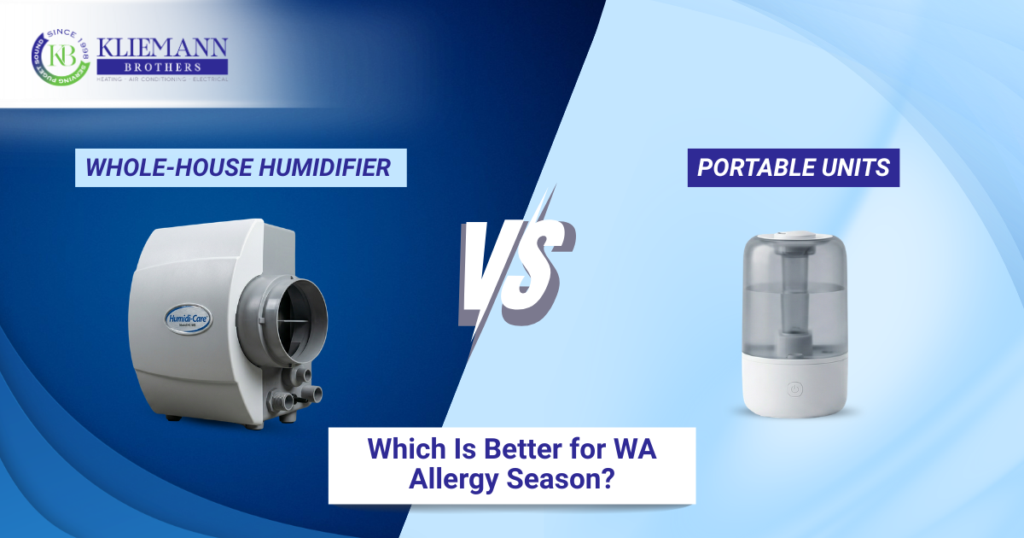
Washington’s allergy season never really ends with tree pollen in late winter, grass and mold spores in the summer, and a steady rotation of airborne irritants throughout the year. Your home’s indoor air quality actually plays a huge role in how severe your allergy symptoms feel. Too little moisture in the air, and your nasal passages dry out, but too much, and you create the perfect breeding ground for mold and dust mites. You may have asked yourself whether a whole-house humidifier or a portable one is the best. With this instructional guide, Kliemann Brothers is here to help you find the answer.
Why Humidity Matters During Allergy Season
The body’s respiratory system depends on moisture to function properly. The membranes lining your nose are the first line of defense against irritants, and when your home is too dry, those irritants can enter your lungs. On the flip side, if the air in your home is too humid, mold growth can trigger respiratory concerns. This is how humidifiers help with allergies. Humidifiers add the right amount of moisture in the air so it never becomes too dry or too moist.
The sweet spot, according to the Asthma and Allergy Foundation of America, for humidity is 30% to 50%, and the best way to maintain it is with a humidifier.
What Is a Whole-House Humidifier?
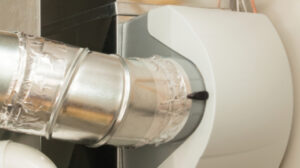
A whole-house humidifier, also called a central humidifier system, connects directly to your home’s HVAC system. It adds moisture to the air as it circulates through your heating and cooling system, distributing balanced humidity to every room in the house simultaneously.
There are several types of whole-house humidifiers, including bypass humidifiers, fan-powered units, and steam humidifiers. Humidifier installation in Tacoma, WA requires a professional HVAC from Kliemann Brothers.
What Are Portable Humidifiers?
Portable humidifiers add moisture to the air in a single room or area. They range in price and come in various styles, including evaporative, ultrasonic, warm mist, and cool mist. They require no installation and can be moved from one room to another.
Whole-House Humidifier vs. Portable Units: Key Differences
These are the key differences between a portable humidifier vs. an HVAC humidifier.
Portable units
The downside of portable units is that they need frequent maintenance. The water tanks need to be filled daily, and the filters and reservoirs need to be cleaned to prevent bacterial growth. They only cover one room per house, and there is sometimes a risk of over-humidification when they run continuously.
Whole-house humidifiers
Whole-house units have automatic humidity control and cover the entire home. They require annual servicing from an HVAC professional and have a higher upfront cost than portable units, but they’re a consistent unit, perfect for humidity control. Read our seven reasons why whole-house humidifiers are worth the cost.

Which Option Is Better for Washington Homes?
Now, which humidifier for allergy relief is better for Washington homes? Coastal and Western Washington homes are exposed to significant outdoor moisture for much of the year, which means indoor humidity levels fluctuate more than in drier inland areas. During the heating season, furnaces run consistently and strip moisture from the air, leading to indoor air that can become surprisingly dry.
Basically, humidity in Washington varies widely, and if you have respiratory concerns, humidity control is highly important. This makes automatic humidity control a must, and that only comes from a whole-house humidifier. Portable units operate at a single output and, when used continuously, can exceed the ideal humidity range of 30 to 50%, exacerbating your allergy symptoms. Whether you’re in the Puget Sound region or the Spokane area, Washington’s diverse climate reinforces the same conclusion that automatic, whole-home humidity control outperforms a portable unit in nearly every meaningful category.
A whole-house humidifier with a humidistat responds to actual indoor conditions, adding moisture only when needed and preventing over-humidification that can worsen mold, allergy, and dust mite problems. Because they cover the whole house, not just one room, they are the best humidifier for allergies.
Benefits of Whole-House Humidifiers for Allergy Relief
When the unit is properly installed and maintained, several whole-home humidifier benefits directly benefit allergy sufferers:
- Consistent and balanced humidity in the home
- Reduced airborne allergens
- Lower mold and dust mite risks
- Better sleep and relief from allergy symptoms
- Easy integration with your current HVAC system
A whole-house humidifier will always improve your indoor air quality in Washington. It works in tandem with your HVAC system to deliver clean and breathable air.
When a Portable Humidifier Might Make Sense
Portable units are still an important appliance to maintain humidity in one room. There are situations where they are a practical and reasonable choice:
- Renting: If you can’t make modifications to your central HVAC, a portable unit or a few are a good option.
- Targeted relief: If you notice that one specific room needs more humidity, such as a nursery or a bedroom, a portable unit is great.
- Budget constraints: Portable units are less expensive than whole-house humidifiers.
If you do use a portable unit, make sure you commit to the maintenance. Clean the tank every one to three days, change filters on schedule, and use distilled or demineralized water to prevent mineral buildup and reduce the risk of bacteria being released into the air. Portable units can also develop mold if their tanks are forgotten about.

Call Kliemann Brothers to Find the Best Humidifier for Allergy Season
Both whole-house humidifiers and portable units can add moisture to your indoor air, but they are not equally effective for Washington allergy sufferers. The best way to find the right humidifier for your situation is to ask the professionals. At Kliemann Brothers, our HVAC technicians are dedicated to helping Washington homeowners find the right indoor air quality solutions for their homes, their health, and their climate. Contact us today to schedule a consultation and reduce your allergy symptoms.
Author Info