Why Your New HVAC System Runs More (and Actually Costs Less)
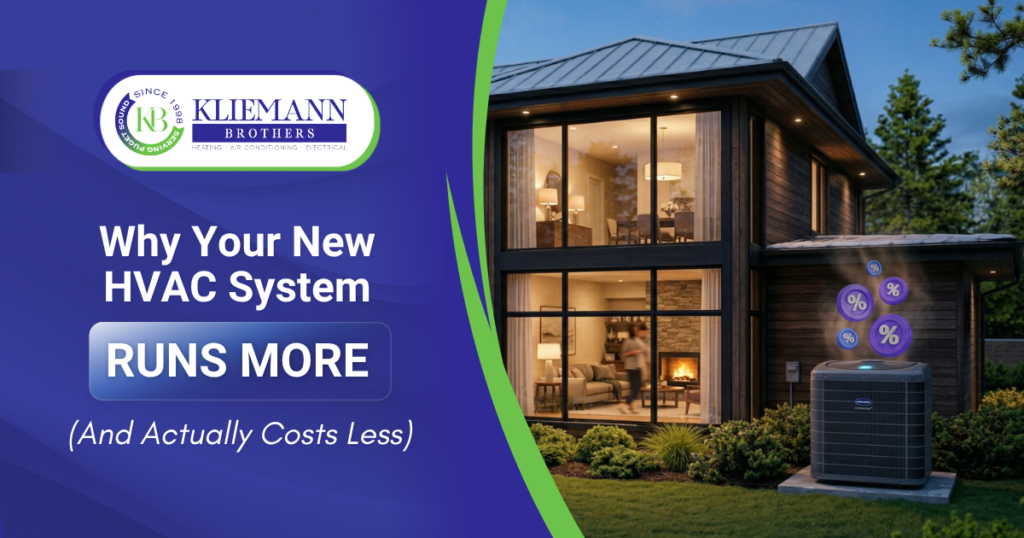
Shortly after upgrading, many homeowners find themselves asking, “Why does my HVAC system run constantly?” While it’s common to think that longer runtimes lead to more wear and higher utility costs, the opposite is often true. Upgrading from an aging, single-speed unit to a high-efficiency, variable-speed HVAC system allows your HVAC to run at lower speeds, maintaining more consistent temperatures and improving your energy efficiency.
Learn why your new heater or AC runs all the time, what it means for your comfort and utility costs, and signs that you may need HVAC services from the trusted team at Kliemann Brothers.
Why Your Old System Worked Like a “Sprinter”
If you think back to your old heating or cooling system, you might remember it running like a sprinter in short, intense bursts. This is because older HVACs are designed as single-stage systems, meaning they can’t adjust their output. They turn on, run at 100% until they heat or cool the house, and shut off.
While it may seem efficient for your system to quickly cool or heat your home, these frequent starts and stops actually use more energy and create uneven temperatures throughout your space. The constant on-and-off cycling leads to repeated full-power bursts, puts added strain on components like the motor and compressor, and forces your system to work harder to maintain consistent temperatures.
Why New Systems Act Like a “Marathoner”
New HVAC systems are designed to act like marathoners, running for long continuous periods at lower speeds. Instead of blasting air at full power, inverter HVAC systems work by using variable-speed technology to adjust their output and often operate at just 20% to 50% capacity.
This slow-and-steady approach allows your system to match your home’s demand in real time, maintaining more even, consistent temperatures throughout your space. By avoiding the constant start-and-stop cycles, your system runs more efficiently, reduces energy waste, and creates a more comfortable home.
The Biggest Hidden Cost: Startup Energy Surges
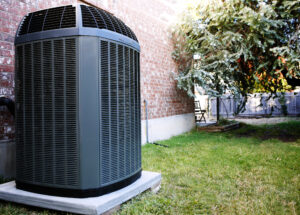
While you may think an AC running constantly uses more electricity, the biggest surge actually happens right when your system turns on. Every startup requires a brief, high-demand burst of electricity to get the compressor motor moving, often drawing up to six times the normal running amperage.
Older HVAC systems can create dozens of these spikes per day, cycling on and off each time your home reaches the set temperature. Newer systems help reduce this strain by running longer at lower speeds, minimizing startups, and lowering your overall energy usage and costs.
More Runtime = More Consistent Comfort
Longer HVAC runtimes keep your home at a more consistent temperature, especially with the Pacific Northwest’s damp winters and summer temperature swings. When your system only runs in short bursts of 10 to 15 minutes, heated or cooled air doesn’t have time to fully circulate throughout your home. By operating at a lower, steadier speed, your system can distribute air more evenly, preventing hot and cold spots.
Running for longer periods also allows your thermostat to take more accurate readings, helping your system maintain a steady, comfortable temperature without constant fluctuations.
Improved Indoor Air Quality & Humidity Control
Notice your air feels less humid since your HVAC upgrade? Older systems with cycles under 10 minutes can leave your room feeling sticky or clammy. When your system runs for longer, more consistent cycles, it has more time to pull excess moisture from the air, improving overall humidity levels.
Longer runtimes also help provide better filtration for your Pacific Northwest home. With more air moving through the system, your HVAC air filter can capture more allergens, dust particles, and airborne pollutants before they circulate through your space. Even when the compressor isn’t running, keeping your fan set to “on” helps maintain continuous airflow and keeps your indoor air fresh.
Does Running Longer Increase Your Energy Bill? (Myth vs Reality)
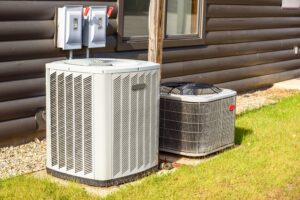
The idea that your HVAC running for longer automatically translates to a high energy bill is a common misconception. A system that runs continuously at a low speed is actually more efficient than one that constantly turns on and off at full power. Instead of having repeated, intensive startups, variable-speed units operate more smoothly, use less electricity, and improve your energy-efficient HVAC system savings.
Signs Your System Is Working Properly
Concerned that your new HVAC or heat pump is running constantly? If extended runtimes are your only concern, there’s a good chance your HVAC is operating exactly as it should. The following signs are good indicators that your system is working properly:
- Your home reaches the temperature set on your thermostat.
- You feel strong, consistent air blowing from the vents.
- The air inside your home feels dry and comfortable.
- Your system runs at a low humming noise.
- Your energy costs are stable or lower since upgrading your system.
When You Should Be Concerned
If longer run times are accompanied by other issues, there may be something more serious going on with your HVAC system. Keep an eye out for the following warning signs that you may need help from the experienced technicians at Kliemann Brothers:
- Your home never reaches the set temperature.
- There’s a sudden spike in your energy bills.
- Little to no air is coming from your vents.
- You hear banging, rattling, or grinding noises from your unit.
- Your system is constantly turning on and off.
The Bottom Line: Running More Means Saving More
If the longer run times of your recent HVAC system upgrade are causing concern, there’s likely no need to worry. High-efficiency, variable-capacity systems operate at lower, steady speeds that actually save you more over time, offering lasting high-efficiency HVAC system benefits.
By minimizing frequent startups and adjusting to your home’s true needs, these systems help prevent energy spikes and unnecessary strain. Your system runs more consistently, reduces energy waste, and maintains more even temperatures throughout your home.
Choose Kliemann Brothers for Your HVAC Solutions
Kliemann Brothers is here to help with all your HVAC needs. Whether your aging system is driving up energy costs, your new heat pump is running longer than expected, or you’re looking to boost efficiency with preventative maintenance, our experts handle it all. With decades of experience serving the Pacific Northwest, we understand the area’s unique heating and cooling challenges and are here to provide quick, lasting solutions tailored to your home.
Call us or book online to schedule your HVAC service in Tacoma or the surrounding areas today.
Author Info